

Dr. Madhur Uniyal, Associate Professor in Trauma Surgery and Critical Care at AIIMS Rishikesh, is a Fellow of the American College of Surgeons and an accomplished trauma care educator. He leads AIIMS Rishikesh’s Aeromedical and Telemedicine Services and coordinates several international collaborations with leading medical institutions in the USA and Israel. His work focuses on trauma systems, emergency preparedness, and advancing medical education through simulation and innovation.
In healthcare, three critical definitions come into play when assessing disasters and accidents within a specific area: Multiple Casualty, Mass Casualty, and Disasters. Multiple casualty events occur when the resources in a given area are strained but not pushed beyond their limits. Mass Casualty events happen when these resources become overwhelmed and require support from other facilities within the same geographical area. When healthcare needs surpass geographical boundaries, it escalates to a Disaster. The impact on health outcomes, such as mortality and morbidity, follows a linear progression along this spectrum, worsening from multiple to mass casualty events, with the most severe consequences seen in disasters.
These definitions are quite fluid and interconnected, as are their corresponding outcomes. Take, for instance, the Silkyara Tunnel Accident in Uttarkashi, where 41 workers were trapped. Under usual circumstances, it might have been categorized as a multiple or mass casualty event. However, due to its unique nature, it necessitated help from across the boundaries and even from other countries, resulting in it being dealt with as a Disaster. With better anticipation and sufficient Capacity Building, it could have been dealt with at a lower level than a Disaster. Thankfully, all lives were rescued, albeit more owing to our extraordinary, arduous response than simple, mindful preparedness. Such incidents should remind us of the importance of enhancing our capacity building to effectively handle unforeseen situations.
While Kedarnath undergoes extensive renovations, radiating more grandeur since the tragic disaster of 2013, an essential inquiry arises: Have healthcare perspectives seen any transformation?
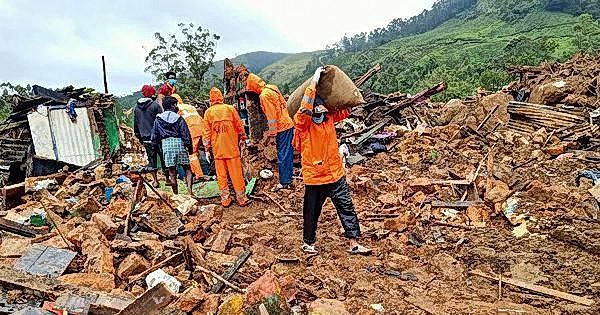
Positioned within a river basin, Kedarnath necessitates self-sufficient, earthquake-resistant healthcare facilities situated at higher points than the basin. These facilities must not only possess medical equipment to address victims of landslides, flash floods, and earthquakes but also harbor healthcare personnel specifically trained to adeptly manage such crises. Would our healthcare response differ if faced with a similar unfortunate event once more? This critical question warrants introspection.
The Kedarnath tragedy sparked a significant shift in our state’s disaster response approach. It led to the establishment of the State Disaster Management Authority (SDMA) and the State Disaster Response Force (SDRF). Subsequently, the state developed a comprehensive Disaster Management Plan encompassing various interventions, such as water sanitation, and proper dead body disposal.
However, it’s disheartening to note a crucial blind spot in this plan, specifically, the absence of a healthcare strategy aimed at saving lives and preventing injuries during the critical ‘Golden Hour.’ Addressing this oversight necessitates breaking down silos and gathering input from all stakeholders in formulating such pivotal plans. There’s an urgent need to revisit and revise this plan to incorporate crucial healthcare strategies during the crucial initial phase following a disaster.
Decision-making during disasters presently follows a Platform Centric model, which can hinder timely response. Consider a scenario during Uttarakhand’s peak pilgrimage season where a major landslide involving a convoy of buses occurs on a busy highway. The information flow traditionally follows a hierarchical chain from local police to higher authorities involving not less than 5 platforms, and the decisions follow the same step ladder pattern down the same chain, leading to delayed actions and potentially impacting the ‘Golden Hour’, crucial for saving lives. To counter this, a Network-Centric approach is essential. This involves pre-emptively defining, grading, and coding potential disasters along with their necessary responses. Advance permissions for these actions should be secured. When a disaster strikes, information is instantly broadcast on a network-centric platform (like internet broadcast messaging), prompting stakeholders to swiftly assume their predefined roles without waiting for permissions. This approach bypasses the conventional step-by-step relay of information, allowing immediate response actions. Instructions can be relayed on the move, ensuring healthcare reaches disaster victims within the critical Golden Hour. It’s important to acknowledge that ‘When disaster strikes, the time for preparation has passed’.
Creating a centralized triaging hub equipped to dispatch appropriate prehospital medical care and transportation is an aspirational goal worth pursuing. Healthcare during disasters transcends location; it’s about ensuring patients reach adequate healthcare facilities or that the necessary services reach the patient. Achieving this demands efficient prehospital transport, emphasizing both surface and air transport modes.
Uttarakhand’s unique hilly terrain, where aerial distance often dwarfs road distance, underscores the significance of helicopter transport. Commendably, AIIMS Rishikesh’s initiative in establishing the country’s first Heli Emergency Medical System (HEMS) with support from the Ministry of Civil Aviation (MOCA) and the Ministry of Health and Family Welfare(MOHFW) is a step in the right direction. Exploring financial sustainability by incorporating prehospital transport into schemes like Ayushman Yojna or attracting insurance companies is crucial. Currently, the 108 ambulance service stands as the primary surface prehospital transport option in Uttarakhand. However, the lack of standardized training for the paramedics involved and the absence of clinical audits raise concerns about quality improvement. Addressing this necessitates regular clinical audits and efforts to retain experienced paramedics, rather than replacing them before they benefit from salary hikes, nullifying their gained experience. The ‘Uberisation’ of existing ambulances across the state emerges as an urgent need. Categorizing and geotagging all ambulances (government or private) onto a platform similar to Uber or Ola would optimize their utilization during disasters and ensure fair compensation. This approach not only standardizes prehospital transport but also incentivizes private sector participation when adequately reimbursed.
The scarcity of trained doctors in Uttarakhand’s State Government services, particularly in remote postings, presents a concerning trend highlighted in a report by SDCH. For instance, Tehri, an important district, only has 13% of the total sanctioned doctors’ positions. This scarcity has often been cited as a reason behind the healthcare challenges in hilly regions. However, overcoming this challenge for disaster healthcare in Uttarakhand is indeed possible. Attracting trained doctors, especially to remote areas, remains a persistent challenge. The skewed doctor-to-patient ratio nationwide, coupled with more appealing opportunities in the private sector, poses a dilemma for these professionals. Additionally, those few doctors committed to public service are deterred by concerns regarding the educational ecosystem for their children. Despite this, it’s crucial to acknowledge the presence of pharmacists or nursing officers in remote government hospitals who, to the best of their abilities, endeavour to bridge this healthcare gap and are often revered as ‘Doctor Saab’ by the local community. Shifting from a Specialist-Centric approach to a Nursing/Paramedic-Centric approach emerges as the most practical and sustainable solution.
Trauma incidents follow a trimodal peak in mortality, with approximately 80% occurring within the first three hours post-injury. Empowering and capacitating this cadre of paramedics/nurses can substantially reduce loss of life or limb during this critical period. Fortunately, the equipment and consumables required for the initial assessment and safe referral of trauma patients are inexpensive and generally available in Community Health Centers (CHCs) and Primary Health Centers (PHCs). This shift in focus offers a viable pathway toward enhancing disaster healthcare readiness in Uttarakhand. The real need for all these changes requires a robust willpower rather than fancy resources.

