
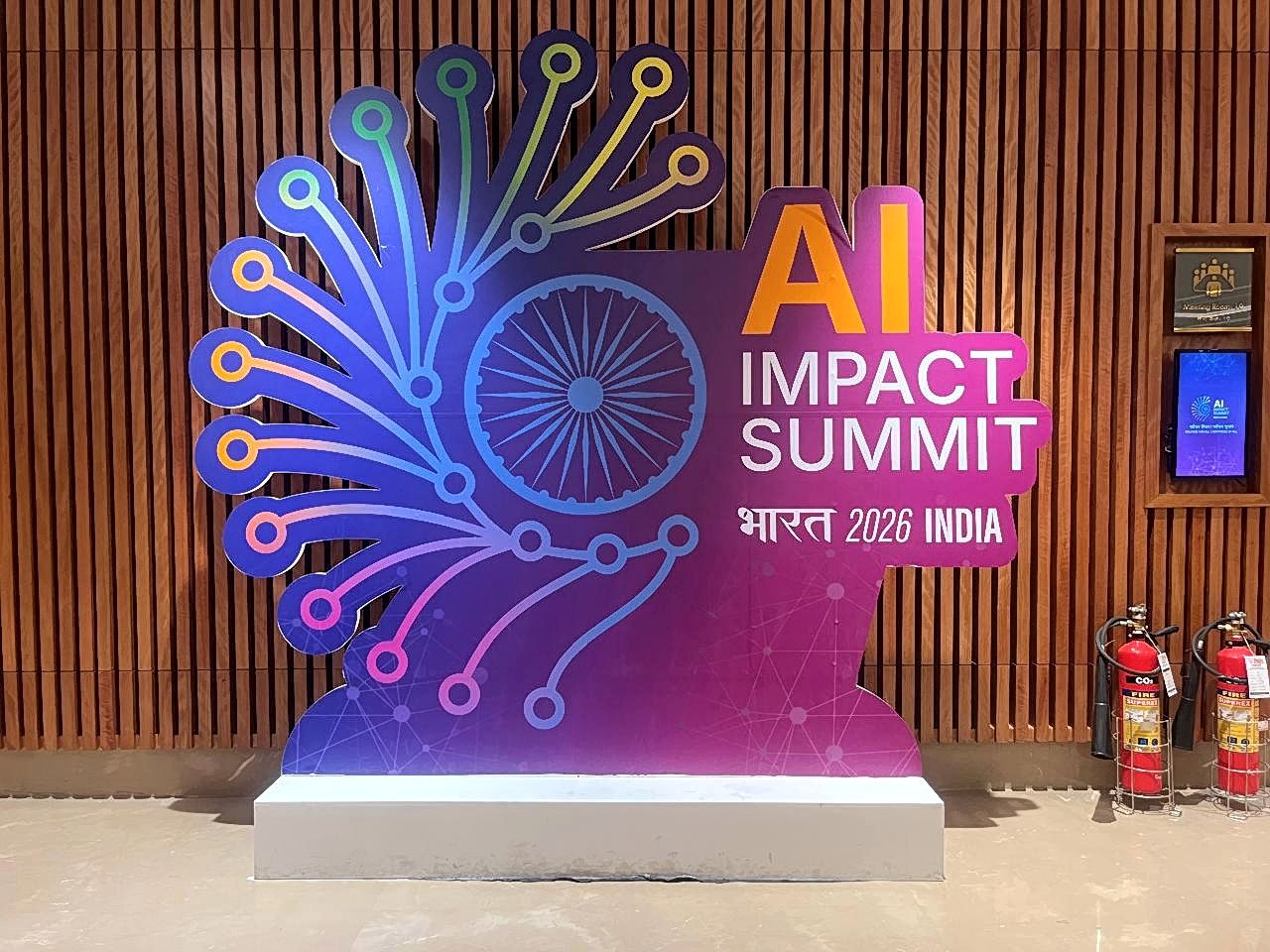
The India AI Impact Summit 2026, held in New Delhi between 16 and 21 February 2026, has been billed by the Government as a major milestone in shaping both national and global conversations around artificial intelligence. According to a Press Information Bureau (PIB) release, the Summit attracted roughly 6 lakh in‑person participants and more than 9 lakh cumulative virtual views, with delegations from over 100 countries and representatives from around 20 international organisations engaging in its high‑level dialogues and demonstrations.
A standout feature of the gathering was a public AI‑responsibility campaign that secured a Guinness World Record for the “Most pledges received for an AI responsibility campaign in 24 hours,” with over 2.5 lakh validated commitments logged. The campaign invited individuals, institutions, and businesses to affirm voluntary adherence to principles such as fairness, transparency, and human oversight, framing responsible AI as a shared societal practice rather than just a regulatory requirement. This emphasis on civic‑level buy‑in complements India’s broader push toward rule‑based AI‑governance frameworks.
On the technology‑and‑infrastructure side, the Summit highlighted a significant expansion of India’s sovereign AI compute capacity under the IndiaAI Mission. The PIB text notes that more than 38,000 GPUs have already been deployed and that an additional 20,000 GPUs will be brought online in the near term, effectively enlarging the national‑level foundation for large‑model training, enterprise‑AI workloads, and public‑sector analytics. By strengthening domestic computing resources, the Government aims to reduce import dependencies and create a more self‑reliant AI ecosystem that can support both research and commercial‑scale deployments.
A set of cross‑border AI‑governance declarations and strategic‑partnership agreements also emerged from the Summit, targeting cooperative frameworks for responsible, resilient, and inclusive AI adoption. These outcomes are positioned as efforts to harmonise standards on data‑governance, safety‑benchmarks, and ethical deployment practices across jurisdictions, with India seeking a role as a co‑architect rather than a passive adopter of global AI‑rules. The declarations are expected to inform future bilateral and multilateral engagements on AI and digital‑governance issues.
The AI Impact Expo, held alongside the main Summit, brought together more than 850 exhibitors across 10 thematic pavilions, making it one of the world’s largest AI‑focused exhibitions. Among the showcased prototypes was an open‑sourced, handheld assistive device developed by BHASHINI and Current AI that can identify objects and surroundings through voice‑based queries and respond in multiple Indian languages. Designed for people with visual and speech‑disabilities, the device has been released to the startup ecosystem for further customisation and scaling, illustrating how policy‑driven demos can feed directly into product‑innovation pipelines.
The event also saw the launch of six global casebooks documenting real‑world AI‑applications in health, agriculture, energy, education, and accessibility, along with the AI Impact Startup Book by MeitY, which profiles India’s AI‑and‑deep‑tech startup landscape. These knowledge products are intended to serve decision‑makers, investors, and practitioners with evidence‑driven models and sector‑specific lessons, helping translate AI hype into grounded investment and implementation choices.
Finally, the Summit’s ground‑level digital‑adoption story was visible in the food‑court payment patterns, where roughly 80 per cent of transactions were conducted via UPI, underscoring how Indian digital‑public‑infrastructure is quietly normalising cashless, real‑time interactions even in large‑scale events. The outcomes of India AI Impact Summit 2026, as captured in the PIB release, converge on a vision of AI as a force for inclusive growth, social‑empowerment, and sustainable development, anchored in robust infrastructure, cross‑border cooperation, and anticipatory governance.
India AI Impact Summit 2026 wraps up with global AI‑governance push and compute‑capacity boost


RELATED ARTICLES
