
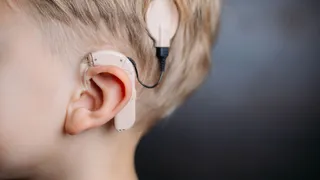
A three-year-old child receives India’s first AI-powered cochlear implant at a government hospital in Rajasthan, marking a significant advancement in accessible paediatric hearing restoration. The procedure, performed at the SMS Medical College Hospital in Jaipur, demonstrates how cutting-edge technology reaches underserved communities through public healthcare infrastructure.
The AI-enhanced cochlear implant integrates machine learning algorithms that adapt sound processing in real-time to the child’s hearing patterns and environment. Unlike traditional devices, the system continuously learns from auditory inputs, optimises speech clarity in noisy settings, and customises frequency mapping for age-appropriate language development. This breakthrough enables children as young as three to benefit from dynamic hearing support that evolves with their cognitive growth.
Medical teams highlight the procedure’s success as evidence of India’s expanding capabilities in AI-medical device integration within government facilities. The hospital’s ENT department, equipped with advanced surgical suites and post-operative rehabilitation units, completes the full care pathway from implant surgery to auditory-verbal therapy sessions. Early results show the child responding to environmental sounds and beginning speech recognition within days of activation.
This milestone underscores Rajasthan’s public health system’s commitment to bridging technology gaps for rural and low-income families. By offering such sophisticated interventions free or at minimal cost, the state eliminates financial barriers that previously confined AI cochlear implants to private urban centres. The case sets a precedent for scaling similar technologies nationwide, potentially transforming early intervention outcomes for thousands of hearing-impaired children annually.
Three-Year-Old Receives Pioneering AI-Based Cochlear Implant at Rajasthan Government Hospital


RELATED ARTICLES
