
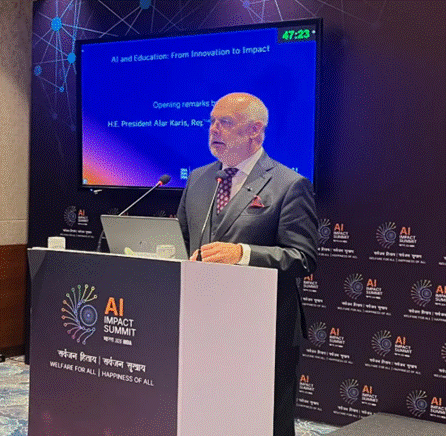
On February 18, 2026, the third day of the India AI Impact Summit 2026 featured a session
titled “AI and Education: From Innovation to Impact,” hosted with the Estonian Embassy in
New Delhi, shifting focus from AI pilots to nationwide adoption in public education systems.
Experts agreed that AI is already in classrooms daily, but the priority is responsible,
equitable deployment emphasizing teachers, pedagogy, governance, and evidence-based
strategies to boost learning outcomes without widening digital divides.
Estonian President Alar Karis asserted, “AI has arrived in our schools… The question is not
whether AI is to be used, but whether it is being used knowingly, critically, and responsibly.”
He stressed data and technology literacy as democracy’s foundation, with Estonia’s policy
aiming for majority basic AI knowledge and half at intermediate international levels,
transparently and ethically to build trust.
Mary N. Kerema, Kenya’s Secretary for ICT, E-Government, and Digital Economy,
emphasized teachers as stable infrastructure: “Without embracing technology, we’ll be left
behind… AI training for teachers must come first” to ensure ethical use starting in
classrooms, even with limited connectivity.
UNICEF’s Global Director for Education, Dr. Pia Rebello Britto, urged AI to strengthen, not
bypass, public systems amid global inequities where 70% of 10-year-olds in
low/middle-income countries can’t read simple texts. She called for ecosystems supporting
teachers, protecting children, and holding accountable public frameworks for structural
equity.
Finland’s Professor Petri Myllymäki dismissed AI panic, noting education’s goal is learning,
not essays: “Use AI tools, but make sure learning happens.” Ivo Visak of Estonia’s AI LEAP
highlighted national buy-in with pedagogical plans backed by tech, fostering public trust
through delivery.
The session framed 2026 as implementation year, advocating national strategies, teacher
training, interoperable infrastructure, and governance for AI-enhanced equitable education.
Education is Key to Responsible AI, Says Estonia President


RELATED ARTICLES
