
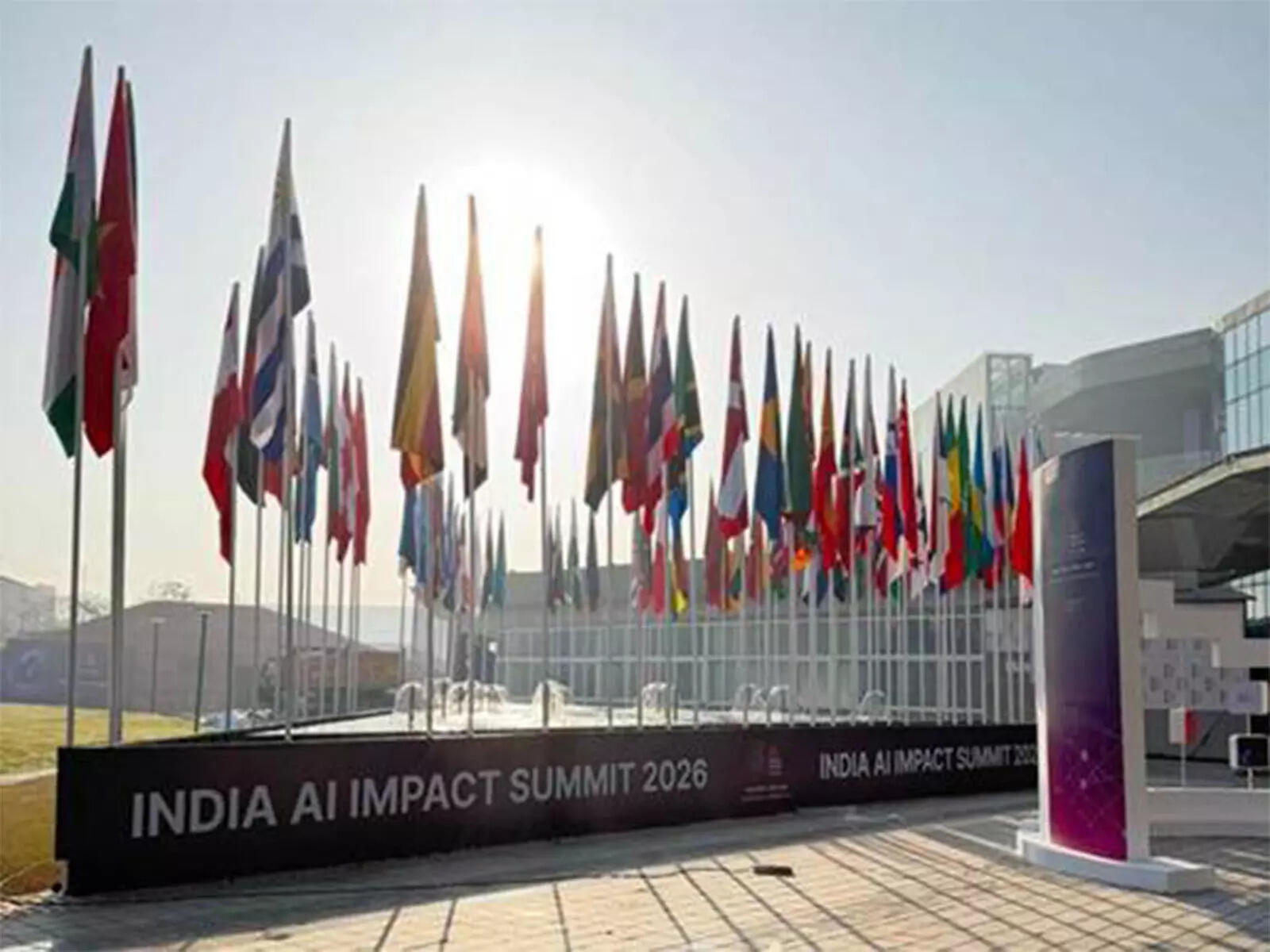
The Ministry of Earth Sciences (MoES) hosted the panel “AI for Our Oceans of Tomorrow: Data, Models and Governance” at the India AI Impact Summit 2026 (February 16–20, New Delhi), uniting officials, scientists, industry, startups, and experts to explore AI’s role in ocean governance, disaster resilience, marine livelihoods, and Blue Economy growth. India Meteorological Department Director General Dr. M. Mohapatra’s keynote underscored the oceans’ vital role in climate regulation, disaster reduction, food security, and livelihoods.
India’s capabilities in ocean observation, cyclone forecasting, and early warnings have
drastically cut extreme weather fatalities through tech advances. AI-augmented data-driven models complement physical ones amid climate threats like warming, acidification, and sea-level rise; the Deep Ocean Mission advances deep-sea exploration, offshore energy, biodiversity, and sustainable resources.
Norway’s Ambassador to India, Ms. May-Elin Stener, highlighted India-Norway Blue
Economy ties, with AI boosting fisheries, shipping, ports, and coastal resilience via open,
interoperable digital foundations. India’s digital public infrastructure leadership enables a
global digital ocean framework with open data, standards, and governance for worldwide
benefit.
Panelists affirmed India’s Global South leadership potential through Digital Ocean
Infrastructure integrating open data, AI intelligence, and governance. AI scales marine
livelihoods, cuts costs, and enables data-driven Blue Economy decisions despite data
scarcity, requiring physics-informed models and international cooperation on shared digital
goods. Policies, data liquidity, blended finance, and risk-sharing can drive sustainable
growth, jobs, and investments.
Dr. (Cdr) P K Srivastava, MoES Adviser, reaffirmed commitment to structured AI-ocean
program integration.
AI to Revolutionize India’s Ocean Governance and Blue Economy


RELATED ARTICLES
